
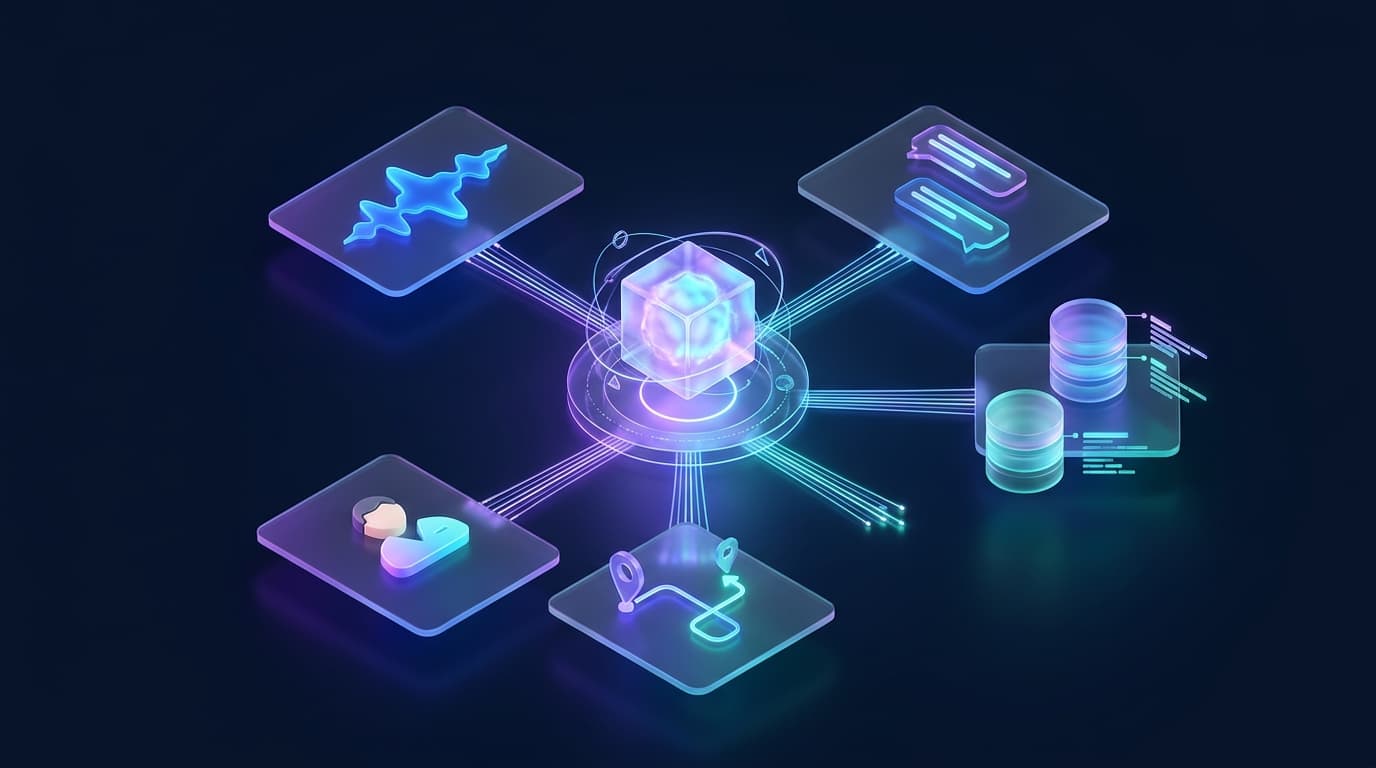
For the past five years, enterprise customer service has been trapped in the shallow waters of conversational AI. Organizations poured billions of dollars into generative chatbots that promised revolution but delivered little more than fluent conversational frustration. Customers quickly realized that whether they were interacting with a legacy rule-based bot or an expensive LLM wrapper, the outcome was functionally identical: the system could explain the company’s return policy in poetic prose, but it could not actually issue a refund, change an address, or rebook a delayed shipment.
The structural limitation of first-generation customer AI was never its vocabulary; it was its inability to act. Traditional customer platforms treat AI as an external decorative widget—an isolated conversational layer perched precariously on top of fragmented databases, siloed contact center queues, and disconnected billing backends. When a customer interaction demands an actual transactional modification, the conversational bot hits a technical dead end and dumps the customer into a thirty-minute queue for a human agent.
Modern enterprises can no longer afford this conversational bottleneck. Customers do not contact support to read knowledge base articles; they reach out because they need an operational outcome. Addressing this challenge requires a fundamental architectural transition: moving away from answer-only conversational interfaces toward action-oriented autonomous AI agents.
At Uniconnect AI, this paradigm shift defines our foundational design principle: 01 · AI That Acts. An intelligent platform must think, decide, and execute across the entire customer lifecycle—verifying identity, reasoning through business policies, orchestrating cross-system API transactions, and following through to full resolution.
Key takeaways
- Conversational AI fails at the point of action because it lacks authenticated write access, bidirectional CRM synchronization, and deterministic workflow governance.
- AI That Acts combines cognitive reasoning (LLMs) with deterministic enterprise tools, enabling autonomous agents to verify records, query databases, calculate solutions, and trigger live backend mutations.
- Auri, Uniconnect AI’s native intelligence core, operates directly inside the platform rather than as a third-party add-on, eliminating the integration latency and context fragmentation of stitched point solutions.
- True autonomous resolution follows a closed 5-stage loop: Customer Data Ingestion → Cognitive Synthesis (Understands) → Policy Evaluation (Decides) → Transactional Execution (Acts) → Verified Resolution.
- Enterprise safety requires a "Human-in-the-Loop" (HITL) architecture: AI agents operate under identical role-based permissions as human staff, autonomously resolving 60–80% of routine interactions while smoothly escalating edge cases with complete conversational context.
- Organizations deploying action-oriented customer platforms achieve an average 74% reduction in first-contact resolution time and eliminate repetitive manual triage costs across voice, WhatsApp, and digital channels.
What Is "AI That Acts" in Enterprise Customer Operations?
In practice, the distinction between conversational AI and action-oriented AI is the difference between a software manual and a licensed operator. A conversational bot can answer the question: "What is your policy on flight rescheduling?" An autonomous AI agent, by contrast, identifies the passenger from their phone number, verifies ticket eligibility in the reservation system, evaluates weather-waiver rules, books the passenger onto the next available flight, updates the airline CRM, and sends boarding pass updates via WhatsApp in under two seconds.
When artificial intelligence is natively endowed with transactional agency, customer service ceases to be a cost center defined by headcount queues and transforms into an autonomous operational engine.
The Three Structural Failures of Traditional Chatbots
To understand why global enterprises are aggressively abandoning standalone conversational tools, CIOs and CX executives must confront the three structural flaws that cripple traditional chatbot deployments:
1. The Read-Only Trap (Knowledge Without Authorization): Most commercial chatbot vendors deploy language models strictly as retrieval-augmented generation (RAG) engines over static PDF documentation. Because these tools lack secure, transactional write permissions to core banking ledgers, ERP inventories, or billing engines, they can never satisfy customer intent. Customers are left with generic troubleshooting scripts rather than resolved tickets.
2. The Fragmented Context Gap: In a legacy enterprise stack, customer information is scattered across disparate applications: Zendesk for ticketing, Salesforce for contact records, 3CX or Genesys for telephony, and custom relational databases for transactions. A standalone conversational bot has zero persistent awareness across these boundaries. It does not know that the customer calling on voice today sent an urgent WhatsApp message two hours ago about the exact same delayed shipment.
3. The Brutal Escalation Cliff: When an answer-only bot reaches the boundary of its pre-programmed script, it has only one fallback: a blind, unassisted queue transfer. The human agent who receives the call has no visibility into what the bot attempted. The customer is forced to repeat their identity, account number, and problem from scratch—causing customer satisfaction (CSAT) scores to plummet and average handle times (AHT) to surge.
Architectural Showdown: Conversational AI vs. AI That Acts
The gap between passive text generation and autonomous platform execution represents an architectural evolution across every layer of the enterprise technology stack:
| Capability | Autonomous Customer Platform (Uniconnect AI) | Traditional Conversational Chatbots (Legacy Stacks) |
|---|---|---|
| Core Objective | End-to-end resolution: completing customer workflows, updating databases, and closing tickets autonomously. | Deflection & conversational answers: providing textual explanations and deflecting tickets to online FAQs. |
| System Access & Permissions | Bidirectional read/write access via native platform event brokers, REST/GraphQL APIs, and verified enterprise connectors. | Read-only access restricted to vector knowledge bases, static help center documentation, and shallow webhook pings. |
| Decision-Making Logic | Cognitive evaluation of live CRM records, SLA policies, and customer sentiment to autonomously determine next operational steps. | Brittle hard-coded decision trees or unguided LLM text generation prone to hallucinations and dead-end conversational loops. |
| Omnichannel Parity | Identical cognitive intelligence shared natively across Voice telephony (SIP PBX), WhatsApp, Web Chat, Email, and SMS. | Fragmented point bots operating on web chat, with separate third-party IVR phone trees and disconnected email auto-responders. |
| Human-in-the-Loop Handoff | Context-rich warm transfer: agent receives synthesized conversation transcript, verified data points, and proposed 1-click actions. | Cold blind queue drop: customer is placed in queue and forced to re-authenticate and re-explain their problem to human agents. |
| Auditability & Compliance | Every reasoning step, tool invocation, and state mutation is logged in real-time with full enterprise audit trails and SOC 2 compliance. | Opaque chat transcripts without structured state tracking, making compliance audits and deterministic debugging virtually impossible. |
Core Objective
System Access & Permissions
Decision-Making Logic
Omnichannel Parity
Human-in-the-Loop Handoff
Auditability & Compliance
The 5-Stage Autonomous Execution Loop
How Auri, the intelligence engine powering Uniconnect AI, transitions an incoming customer interaction from raw intent to verified resolution in under two seconds:
Customer Data Ingestion & Identity Verification
The interaction arrives via inbound voice call, WhatsApp message, or API trigger. The platform immediately matches caller ID, phone number, or authenticated credentials against the central CRM record, retrieving active orders, SLA tiers, and interaction history.
Cognitive Context Synthesis (Understands)
Auri analyzes the customer inquiry against live backend telemetry. If a customer reports a missing parcel, Auri checks courier API feeds, GPS geocodes, and warehouse dispatch logs in parallel, determining that a highway delay occurred.
Policy & SLA Rule Evaluation (Decides)
Auri references enterprise operational policies encoded in the platform. It calculates whether the customer qualifies for an immediate automatic rebooking, a partial credit, or priority tier escalation, making an executive determination without human latency.
Transactional System Execution (Acts)
Auri invokes transactional APIs: it rebooks the courier delivery slot in the logistics system, applies a service courtesy credit in the billing engine, updates the internal CRM ticket status to "Resolved", and sends an interactive confirmation card to the customer.
Closed-Loop Verification or Warm Escalation (Outcome)
If the transaction succeeds within policy guidelines, the ticket is autonomously closed with a full machine-generated audit summary. If the request involves a disputed claim exceeding policy thresholds, Auri routes the case to a senior specialist with the complete context pre-attached.
Full Omnichannel Parity: Deploying Agents Across Every Touchpoint
Autonomous customer agents cannot be confined to a corner website chat bubble. Uniconnect AI provides native parity across all major enterprise communication channels:
Native Inbound & Outbound Voice Agents
Powered by integrated 3CX telephony with sub-100ms voice synthesis. Auri conducts natural phone conversations, authenticates callers, updates database records in real time, and handles complex spoken negotiations.
Official WhatsApp Business API Agents
Engage customers on the world’s most popular messaging app. Autonomous agents send interactive buttons, parse photos of receipts or damaged goods, and execute instant rebooking and payment collections.
Automated Email Ingestion & Resolution
Deep natural language comprehension parses high-volume unstructured email inboxes, extracts invoice attachments, verifies account numbers, updates ERP records, and drafts authoritative resolutions.
Two-Way Transactional SMS Workflows
High-urgency mobile notifications that support two-way interactive messaging for appointment confirmations, loan payment restructuring, and delivery gate code verifications.
Real-World Scenarios: AI That Acts in Enterprise Production
To illustrate the transformative operational impact of action-oriented AI, consider how leading enterprises deploy Uniconnect AI across mission-critical customer operations:
Scenario 1: High-Volume Logistics & E-Commerce Support
A customer sends a WhatsApp message at 7:30 AM: "My package #8821 was scheduled for yesterday, but it never arrived. Where is it?" Traditional chatbots reply with a static tracking link. Auri handles the entire resolution:
1. It authenticates the customer record from their WhatsApp phone number.
2. It queries the carrier logistics API and identifies that the courier encountered an ambiguous apartment buzzer code.
3. It prompts the customer for their gate code, writes the updated entry instructions directly into the courier dispatch database, and reschedules delivery for that afternoon.
4. It generates an updated delivery pass, updates the CRM status, and closes the ticket—all in under 20 seconds without a human agent touching the queue.
Scenario 2: After-Hours Enterprise Sales Qualification & Booking
An enterprise buyer from a Fortune 500 bank visits the website at 11:15 PM and requests a pricing demonstration for 500 contact center seats. Traditional forms store the lead in a database where it sits idle until 9:00 AM the next business day.
Auri acts immediately: It enriches the lead record via LinkedIn and Clearbit APIs, identifies that the organization meets tier-one Ideal Customer Profile (ICP) criteria, checks the dedicated enterprise account executive’s live Google/Outlook calendar, and interacts with the prospect to book a confirmed 30-minute demonstration for the following afternoon. By the time the account executive opens their laptop in the morning, the meeting is booked, the CRM account is populated, and an executive briefing dossier is attached.
Scenario 3: Regulated Collections & Financial Payment Plans
A retail banking customer’s loan installment is 14 days overdue. Traditional debt recovery involves intrusive outbound cold calls from overworked agents who frequently face hostile reception.
Uniconnect AI deploys an empathetic, policy-governed agent: Auri initiates a personalized WhatsApp notification offering three flexible restructuring schedules pre-approved by the bank’s credit policy. The customer selects a bi-weekly installment plan with a single button tap. Auri records the formal promise-to-pay in the core banking ledger, generates the updated schedule PDF, sets automated calendar reminders, and closes the recovery ticket. If the customer disputes the underlying principal amount, Auri immediately flags the interaction and routes it to the specialized dispute resolution team.
Enterprise Governance: Ensuring Deterministic Safety for Autonomous AI
The primary hesitation among enterprise CTOs and risk officers when considering autonomous AI is not capability; it is governance. Allowing an AI model to write to production databases introduces operational risk if the platform lacks rigorous control layers.
Uniconnect AI resolves this challenge through our Enterprise Guardrail Architecture, ensuring that autonomous agents act predictably, securely, and within established organizational boundaries:
- Role-Based Operational Permissions (RBAC): AI agents operate under the exact same permission profiles, data scopes, and API authorization tokens assigned to human frontline representatives.
- Deterministic Business Rule Enforcement: While LLMs interpret unstructured customer language and intent, all transactional decisions must clear deterministic validation scripts before database execution occurs.
- Immutable Real-Time Audit Logs: Every reasoning step, tool call, database query, and message transmission is logged in an encrypted, tamper-proof audit trail for regulatory compliance.
- Tenant Data Isolation & Zero Model Training: Customer data is processed within isolated single-tenant or VPC environments. Enterprise data is never retained, logged, or used to train third-party frontier models.
- Automatic Human Escalation Thresholds: High-risk actions—such as refund requests exceeding $500, legal dispute claims, or severe customer sentiment drops—automatically trigger seamless warm hand-offs to senior supervisors.
Why Uniconnect AI Is the Premier Platform for Autonomous Operations
Most enterprise software vendors attempt to deliver autonomous customer service by selling an expensive patchwork of disconnected technologies: an incumbent CRM license from one vendor, an omnichannel contact center from a second, a third-party conversational bot add-on from a third, and complex integration middleware from a fourth.
This fragmented approach introduces crippling integration taxes, brittle synchronization points, and hidden per-seat licensing penalties. Every time your team wants to add an automated workflow or connect a new communication channel, you are forced to purchase additional connector licenses and hire expensive systems integrators.
Uniconnect AI eliminates tool fragmentation by unifying Omnichannel Inbox, No-Code CRM, Voice Telephony, Workflow Automation, and Autonomous AI Agents into a single, cohesive platform.
With Auri integrated natively into the core data fabric, your business gains an autonomous workforce that thinks, acts, and automates across every customer touchpoint—deployable on your private cloud, open to your preferred AI models, and licensed under one transparent per-seat price.
Frequently Asked Questions About Autonomous AI in Customer Experience
What is the fundamental difference between conversational AI and an autonomous AI agent?
How does Uniconnect AI prevent autonomous agents from hallucinating or taking unauthorized actions?
Can autonomous AI agents handle voice calls as effectively as digital chat?
Does deploying Uniconnect AI require replacing our existing CRM or ERP backends?
How is Uniconnect AI licensed compared to traditional enterprise software with AI add-on fees?
Bring one customer process. In a 30-minute working session, our solutions engineering team will configure an autonomous Auri agent running live across your channels, your CRM data, and your business workflows.
Uniconnect AI Strategy & Architecture Team
Updated November 20, 2026